
Type Chart
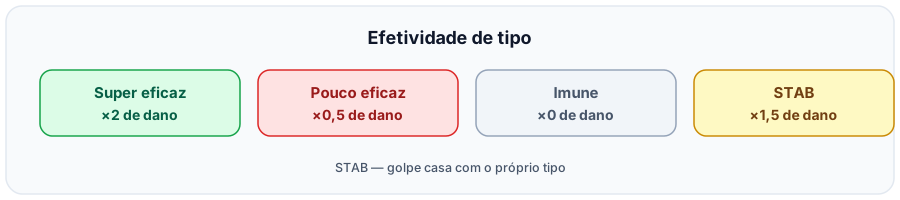
The game uses the classic mainline type chart (18 types, including Fairy). It is multiplicative: each move is compared against the defender's 1 or 2 types, and the multipliers multiply together. That makes combos of ×4 (double weakness), ×0.25 (double resist) and ×0 (immunity) all possible, exactly like the original games.
Multipliers
| Relation | Multiplier (per matching defender type) |
|---|---|
| Super-effective | ×2 |
| Not very effective (resisted) | ×0.5 |
| Immune | ×0 (the move simply deals no damage) |
| Neutral / typeless / status move | ×1 |
Because dual types multiply independently, the possible net values are: ×0, ×0.25, ×0.5, ×1, ×2, ×4.
Full attacking chart
Read as: attacking element → what it does to those defender types. Any type not listed is neutral (×1).
| Attacker | Super-effective (×2) | Resisted (×0.5) | Immune (×0) |
|---|---|---|---|
| Normal | — | Rock, Steel | Ghost |
| Fire | Grass, Ice, Bug, Steel | Fire, Water, Rock, Dragon | — |
| Water | Fire, Ground, Rock | Water, Grass, Dragon | — |
| Electric | Water, Flying | Electric, Grass, Dragon | Ground |
| Grass | Water, Ground, Rock | Fire, Grass, Poison, Flying, Bug, Dragon, Steel | — |
| Ice | Grass, Ground, Flying, Dragon | Fire, Water, Ice, Steel | — |
| Fighting | Normal, Ice, Rock, Dark, Steel | Poison, Flying, Psychic, Bug, Fairy | Ghost |
| Poison | Grass, Fairy | Poison, Ground, Rock, Ghost | Steel |
| Ground | Fire, Electric, Poison, Rock, Steel | Grass, Bug | Flying |
| Flying | Grass, Fighting, Bug | Electric, Rock, Steel | — |
| Psychic | Fighting, Poison | Psychic, Steel | Dark |
| Bug | Grass, Psychic, Dark | Fire, Fighting, Poison, Flying, Ghost, Steel, Fairy | — |
| Rock | Fire, Ice, Flying, Bug | Fighting, Ground, Steel | — |
| Ghost | Psychic, Ghost | Dark | Normal |
| Dragon | Dragon | Steel | Fairy |
| Dark | Psychic, Ghost | Fighting, Dark, Fairy | — |
| Steel | Ice, Rock, Fairy | Fire, Water, Electric, Steel | — |
| Fairy | Fighting, Dragon, Dark | Fire, Poison, Steel | — |
STAB: Same-Type Attack Bonus
STAB = ×1.5. A move whose element matches one of the pokémon's own types deals 1.5× damage. It applies equally to native moves and TM-taught moves, no double counting.
How type becomes hunt pace
Your pokemon picks its move on its own, reading the enemy it is aiming at. Among the ready moves, out comes the one that would really do the most damage to that enemy, not the one with the highest power: type advantage, STAB and whether the move is physical or special against that enemy's defenses all count. Area moves are judged against the group: their damage is added up over everyone they would hit, and they come out when they are the best answer to the pack on you.
The move priority you set comes first: the move you put first comes out whenever it is ready and in range. Picking by damage only breaks ties between moves with the same priority. This works in hunts and raids. In the Arena the priority does not apply: there the ready move that does the most damage always comes out.
This carries into hunt pace too: type is measured against all enemies in the region. For each enemy, the game looks at your moves' effectiveness (already with STAB) and weighs 70% on your best move against it, 30% on the average of the rest of your moveset. The weight sits on the best move precisely because your pokemon prioritises it.
Meaning: one great move helps a lot, but a wrong moveset still drags you down (cooldowns and range mean the right move is not always ready). That result is weighted by how often each enemy appears in the region, then locked into a safe range so it never spirals out of control:
| Clamp | Value |
|---|---|
| Min type multiplier | 0.6 |
| Max type multiplier | 1.75 |
If your lead has no valid moves, or the region has no resolvable enemies, the multiplier is neutral (1.0). See how it combines with the other multipliers in Damage Formula.